Showing posts with label children. Show all posts

Friday, October 21, 2016

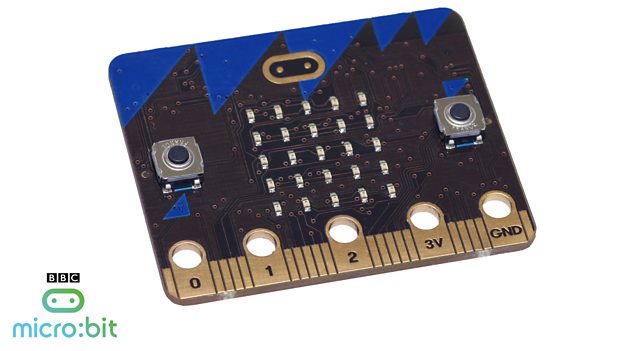
Opening the BBC micro:bit

As many of you will know, the PSF has been a partner in the British Broadcasting Corporation's (BBC) micro:bit project. A million devices capable of running MicroPython have been distributed to every 11 and 12 year old in the UK. Those of you lucky enough to attend EuroPython and PyCon UK will have also been given a device to take home.

The PSF wouldn't be involved if the project were not open source, and it has always been the intention that all the software and hardware designs should be released under open licenses so that anyone can recreate the project themselves.

We're very pleased to continue our association with the project as a partner with the new MicroBit Foundation ~ a charity tasked to promote and develop the project now that the BBC is stepping away. (It was always the intention of the BBC to step back once the UK "drop" of devices was complete.)

A few days ago they revealed their website and the final piece of the jigsaw was revealed: the hardware schematics.

If you're interested in learning more, check out the hardware page, learn about MicroPython on the micro:bit, join the Slack channel and take a look around the wider project.

It's a very cool device and puts Python firmly in the world of embedded hardware and Internet of Things. It's also a great complementary device to the Raspberry Pi: the skills children learn on the micro:bit transfer to the Raspberry Pi and vice versa. That there is progression from complete beginner to professional software developer is one of Python's great strengths.

Python is for everyone, no matter their age or ability. Having open embedded hardware that runs MicroPython makes Python all the more available to enterprising people all over the world.

Have fun!

Thursday, November 19, 2015

Meet the Coulson Tough Elementary Python Club

As we all know, one of the PSF’s main purposes is to educate and advocate for the use of Python. What makes us so successful in this area is the enthusiasm with which the community is willing to share its time and knowledge. For me, hearing these stories is the best part of working with the PSF. We have recently heard from an educator in Texas who is seriously changing students' lives by teaching them to code with Python. She is Fifth Grade Science Teacher, Melissa Dylag, of Coulson Tough Elementary School, a K - 6th school in South East Texas.
Melissa’s adventure started in 2013 when she was approached by a parent who urged her to introduce her students to the world of coding and computer science. Using the non-profit Code.org  tutorial, "Hour of Code,"  Melissa taught each of her fifth grade classes for three days. Melissa inspired Technology teachers Noreen Reid and Shelley Moya, who in turn taught other students; by last year, almost every student in the school (about 1000) had completed an hour of computer science instruction via the free website.
Coulson Tough Python Club 

The students' response was fantastic, so Melissa wanted to do more to empower her students. She recruited the help of her son (a recent computer science graduate and now a Silicon Valley software engineer) to develop a full intro course using Python. According to Melissa, Python was a good choice because it offers my students everything to build a proper foundation for future computer science instruction.
Melissa, along with helpers Noreen and Shelley, are learning Python as they go. They teach about 30 students, an approximately equal mix of boys and girls in 4th, 5th and 6th grades, every Wednesday morning before the regular school day. Kids and teachers in the Python Club are loving it–they’re even making T-shirts.  
Children are coming to school over 45 minutes early in the morning to code. We have a line of cars at 6:50 in the morning for students that can’t wait to come in to code. PYTHON is a huge success and I am turning children away because we don’t have enough computers in the lab to accommodate them all.
Melissa shared with us some of her recent Python Club lessons lessons.  Please take a look--I think they're terrific. (I was especially impressed with the wisdom of one of her early slides: The biggest challenge in coding is to learn how to make changes and how to recover if the changes fail.)
6th grader Payton Gwynn

The parents are also thrilled. One parent emailed that her 6th grade daughter …has really enjoyed learning programming. She takes a picture of what she does on Wednesday mornings and can’t wait to show me what she has created…. I love that this club is exposing girls to programming.
Melissa plans to expand to offer two classes next year: an advanced class so that this year’s students can continue, and another introductory one. She needs to get approval from her administration, but she is enthusiastic and determined.
I want to do what is best for the children. We all love PYTHON and we are thrilled to share what we are learning… We are pumped to be a PYTHON school.
Please join me in thanking Melissa, her helpers, students, and all the teachers like her. We are pumped to have them as part of our community!
I would love to hear from readers. Please send feedback, comments, or blog ideas to me at [email protected].

Tuesday, October 20, 2015

BBC’s micro:bit project open-sourced today!

As you may recall, there have been a couple of previous posts to this blog about the BBC’s micro:bit project  (also see PSF newsblog).
The micro:bit is a small, stripped-down, wearable computer (similar to a Raspberry Pi) and based on an nRF51 chip. The educational project, part of a larger UK program called Make it Digital, is designed to inspire children to become digital creators by giving away 1 million micro:bits to all 11 year-old UK schoolchildren this spring.

Today I heard some exciting news about the project from our good friend, Nicholas Tollervey, which I’m happy to pass along here. 
According to Nicholas: 
From the beginning the BBC have said that Python would be one of the possible languages that the device can be programmed in. The PSF is one of around twenty organisations in the project partnership. Since it’s a microcontroller, and the aim is to run Python… well, there’s a pretty obvious answer when trying to combine those two things. 
We’re incredibly pleased to announce that MicroPython runs on the BBC’s micro:bit. Furthermore, all the work done so far is being open-sourced today and the repository can be found here: https://github.com/bbcmicrobit/micropython
Right now only the code related to the MicroPython port is released. When the device is delivered, all the resources needed to recreate the entire project are to be released under an open license. The laudable intention is to provide an unencumbered legacy so others can build upon and adapt the work of the partnership that has created this device. 
To read more details and learn the story of how MicroPython came to be on the micro:bit, check out Nicholas Tollervey’s blog post found here: http://ntoll.org/article/story-micropython-on-microbit
Finally, there is much to be done. The project needs help from people with skill and experience developing for such devices. Could you contribute something to a project that will touch the lives of 1 million children and leave an open legacy that anyone could re-use? If so then please read the above-linked post and head on over to the code repository.
I hope that many of you will take Nicholas up on his request to contribute to this worthwhile project.
I would love to hear from readers. Please send feedback, comments, or blog ideas to me at [email protected].

Friday, April 17, 2015

My Dinner with Katie

Last week at PyCon, I had the pleasure of talking with Katie Cunningham at a dinner party hosted by O'Reilly. Katie is well-known in the Python community. The author of Python in 24 Hours, 2nd edition (Pearson 2013),  Accessibility Handbook (O'Reilly 2012), and a video series Python Guide for the Total Beginner LiveLessons (Pearson 2013), she has also given talks and presentations at a number of conferences. Last year the PSF honored her with its Community Service Award in recognition for her work in founding and providing the Young Coders tutorial (along with co-recipient Barbara Shaurette).
Imagine a room filled with pre-teens and teenagers eager to learn to code. Pretty daunting, huh? That’s the challenge Katie has taken on with Young Coders. This one-day tutorial covers basic Python by starting with simple concepts and then building up. Using Raspberry Pis, Katie says, helps to “demystify the computer,” and by the end of the day, students are doing fairly complex work with loops, and reading others' code. Last week at PyCon Montreal, 41 students attended one of the classes.
You can check out Katie and Barbara’s 2014 PyCon talk about Young Coders.
Katie teaching Young Coders
As we conversed about Python, teaching, and writing, I observed first-hand those qualities that make Katie an effective teacher—passion, clarity, perceptiveness, wit, and humor. With a degree in Psychology, she “stumbled into technology” and found that it paid well. “It’s hard to say ‘no’ to money when the alternative is to get an MA degree and make $40K,” she explained. But I believe that Katie is a natural teacher, so I’m not surprised that once in tech—she’s worked for NASA and Cox Media—she pioneered ways of making it more accessible to others and easier to learn. Her current professional position combines her technological prowess and her pedagogical talents as Senior Applications Developer and Director of Technology at Speak Agent, a provider of customized interactive content for language teachers. 
Some of Katie’s teaching philosophy and techniques come from her experience as a mother. She told me that her kids had access to their own computers at the age of three, in large part because she wanted them to stay away from her computer. The result is that her kids are very fluent—if you give them a computer, they can figure out immediately what to do with it. It’s not, according to Katie, that her seven year old daughter is so smart; rather she’s had four years of informal training. But of course many kids don’t have that advantage—they’ve grown up in homes where there was no computer, or maybe only one, but it was too precious to allow the kids to use it. Katie wants to be able to formalize the informal training—to teach kids such basic ideas as how to generally find something on the computer, or the differences between an email application, a web browser, and the internet (some kids, and even adults, confuse them). 
So Katie finds that using concrete metaphors and teaching basic vocabulary are extremely important in getting kids to understand coding. For example, Katie teaches the logic of and/or by reference to pet stores; in Virginia, in order to buy a fish, a person needs to be at least 18 years old, AND have money to pay for it, AND promise to put it in an aquarium and not into the river (apparently, this was a problem)—all of these conditions must be true. But when paying, you can use cash OR credit OR a data card OR a gift card. She says that her students respond well to these kinds of examples. Teaching this way is not only effective, but it “brings the humanity back into tech”—it shows that these are things that humans do, rather than abstract relations between a person and a machine. 
In the future, Katie would like to teach coding to younger children. Since the Young Coders track is restricted to ages 12 and older, Katie sees this as a real need. We have younger kids coming to PyCon, as more attendees bring their kids and want a class for them. But putting very young kids in a class with older learners doesn’t work well. Their needs and learning styles are quite different. For example, five year olds don’t have the physical control or dexterity to type or to sit still for long. Katie would like to develop a teaching track that is “more kinetic.” Basic concepts, like the logic of if/elif/else could be taught by having the kids get in one line IF their shirt is red, ELSE IF green, get in another; or ELSE, yet another.
I’m happy to report that these and other great ideas are going to be available in Katie’s next book, Kids Code (current working title). It will be an O'Reilly interactive book that has a dual purpose: 
[It] … not only teaches the student how to program, but teaches the mentor how to teach. Through carefully laid and interactive chapters, the student is guided not only through the basics of programming, but all the way up to game development and creating websites. At the same time, the mentor is coached in how to help their student solve problems, warned about where students often have trouble, and explains why lessons are structured in a certain way” (see LinkedIn).
The book sounds like a wonderful tool for teachers and learners (of all ages) and I’m looking forward to reading it. Thank you Katie, for sharing your expertise and insight with the rest of us. Your work is a huge part of what makes the Python community a living, growing, exciting, and powerful entity of awesomeness.
I would love to hear from readers. Please send feedback, comments, or blog ideas to me at [email protected].